
I wouldn’t call myself a full-blown petrolhead. Most of my car knowledge comes from watching Top Gear with Clarkson, May, and Hammond. The same can be said with Formula 1. I keep up with the races, I know the drivers, and I’ve definitely yelled a pit strategy or two, even if I’m not glued to the screen every race weekend. I’ve even applied to a few roles with F1 teams, thanks to my degree in Aerospace Engineering. So going into Joseph Kosinski’s F1, I didn’t know which gear the film would start in other than top gear. What I got was a well-tuned, high-revving piece of entertainment that hugs every cinematic corner with precision. Hardcore F1 fans will no doubt eat it up, but even the casual moviegoer will have a blast. It’s fast, loud, and wildly entertaining from lights out to checkered flags.
We follow Sunny Hayes (Brad Pitt), an aging American racing driver and former Formula 1 prodigy who now lives out of his van, bouncing from track to track as a racer-for-hire. On the surface, he’s laid-back and rough around the edges, but underneath, he’s still haunted by a brutal crash that nearly killed him three decades ago. That moment sent him into a tailspin of depression, gambling addiction, and three failed marriages. After pulling off an unlikely win at the 24 Hours of Daytona, he’s approached by his old teammate Ruben (Javier Bardem), who now runs the struggling APXGP Formula 1 team. The team’s been on a brutal losing streak, and if they don’t win at least one of the nine remaining Grands Prix this season, Ruben loses everything. So he makes Sunny an offer: come back to F1 as their number two driver. Sunny reluctantly agrees and heads to England, where he’s introduced to Joshua Pearce (Damson Idris), the team’s hotshot rookie who thinks he is all that, and Kate (Kerry Condon), the sharp and fiercely competent APXGP technical director. Whether they get along or not, they’ve got no choice but to work together and find a way onto the podium, because it’s the only thing that can save the team from being sold off.

If it wasn’t obvious already, F1 sticks pretty closely to the classic underdog formula, hitting nearly every beat you’d expect. When we first meet the APXGP team, they’re an absolute mess, morale is in the gutter, everyone’s at each other’s throats, and no one can figure out why the car won’t perform. But thanks to Hayes’s experience and steady hand, things slowly start to shift. Communication improves, egos are checked, and for the first time all season, the team starts to pull together. They finally manage to build a car that can hold its own against heavyweights like Red Bull, Ferrari, Aston Martin, and McLaren. Just when things are looking up, a devastating crash knocks the wind out of them and throws everything into question. And with only one Grand Prix left, we’re left gripping our seats, hoping they can pull off the impossible. It’s a story we’ve seen before, but it’s a good one.
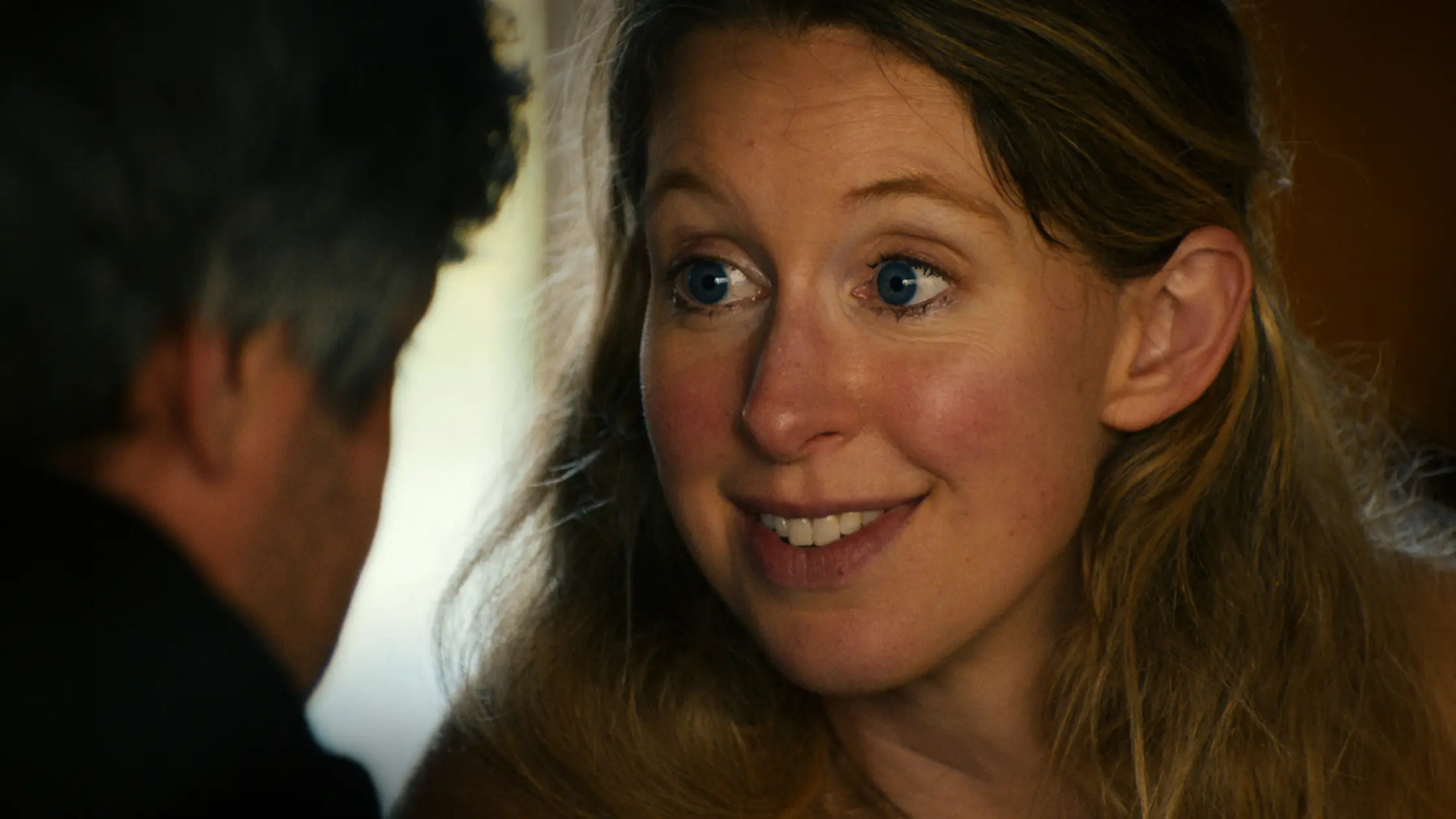
As expected, the characters are a bit paper-thin, even with strong performances from the cast. Brad Pitt is basically playing a version of himself, an experienced racer with a chill exterior and a deep love for the sport, but someone who can still be reckless and unpredictable behind the wheel when his emotions get the better of him. Damson Idris plays the classic hotshot rookie who thinks he’s untouchable and needs a good dose of humility. Both characters are clearly meant to learn how to work together and keep their egos in check. Then there’s Kerry Condon, who’s introduced as the first female Technical Director of an F1 team, which should be a big deal, but the film frustratingly reduces her to a love interest for Pitt’s character instead of letting her fully own that space. Still, as much as the film plays like a story we’ve all seen before, with very little deviation, you kind of just go with it. F1 is such a good time that its predictability becomes part of the comfort. It’s a classic formula, sure, but it’s executed with real energy and style.

Using the same high-octane filmmaking techniques he brought to Top Gun: Maverick, like strapping cameras inside cockpits and mounting them all over the aircraft. Joseph Kosinski now bolts the audience straight into the carbon fiber monocoque of a Formula 1 car, rocketing past 200 MPH on the straightaways and pulling up to 5 Gs through corners. Every race sequence throws us right into the cockpit, inches from the steering wheel and surrounded by the hum and chaos of real F1 machines. You don’t just hear the roar of the 1.6-liter turbocharged V6 engine pumping out over 1,000 horsepower, you feel it in your chest, like your ribs are rattling along with the chassis. The camera swings from front to back, tracking tire degradation, brake temps, and every twitch of the steering wheel, syncing us with the drivers’ split-second decisions and mental strain. It’s visceral, it’s relentless, and it’s pure octane-fueled adrenaline. And with Hans Zimmer’s electrifying score throttling in the background, it’s damn near impossible not to jump out of your seat. F1 is what happens when immersive filmmaking redlines.
Even though F1 follows a story we’ve seen play out thousands of times before, Joseph Kosinski somehow manages to inject new life into its veins. What makes F1 special isn’t the plot, it’s the execution. The way the camera hugs the asphalt, the way the sound design rattles your bones, the way every gear shift and tire squeal feels like it’s happening right under your seat. It all adds up to something truly thrilling. It’s raw, it’s loud, it’s relentless. Kosinski puts you inside the car, inside the driver’s head, and never lets you out. This is immersive filmmaking firing on all cylinders. F1 isn’t just a movie but a full-body cinematic experience, and one that absolutely deserves to be seen on the biggest, most beautiful silver screen you can find. Anything less would be like watching the Monaco Grand Prix on a Game Boy.
My Rating: B+



Leave a Reply