
Everyone knows the tale of Jonah, the prophet who defied the word of God and was punished for his disobedience. God unleashed a great storm upon Jonah’s ship, eventually leading the prophet to be consumed by a great fish, often depicted as a whale. After spending three days in the whale’s spacious stomach, Jonah begged God for forgiveness and repented for his sins. God eventually forgave him and commanded the fish to release him, which it did by throwing Jonah back up and the prophet continued to spread the word of God. Though the tale is thousands of years old, it has influenced countless works such as Moby Dick and Pinnoccio. But what would actually happen if someone was actually consumed by a whale? Well if someone was actually consumed by a whale, it will make Jonah stay like the Four Seasons.
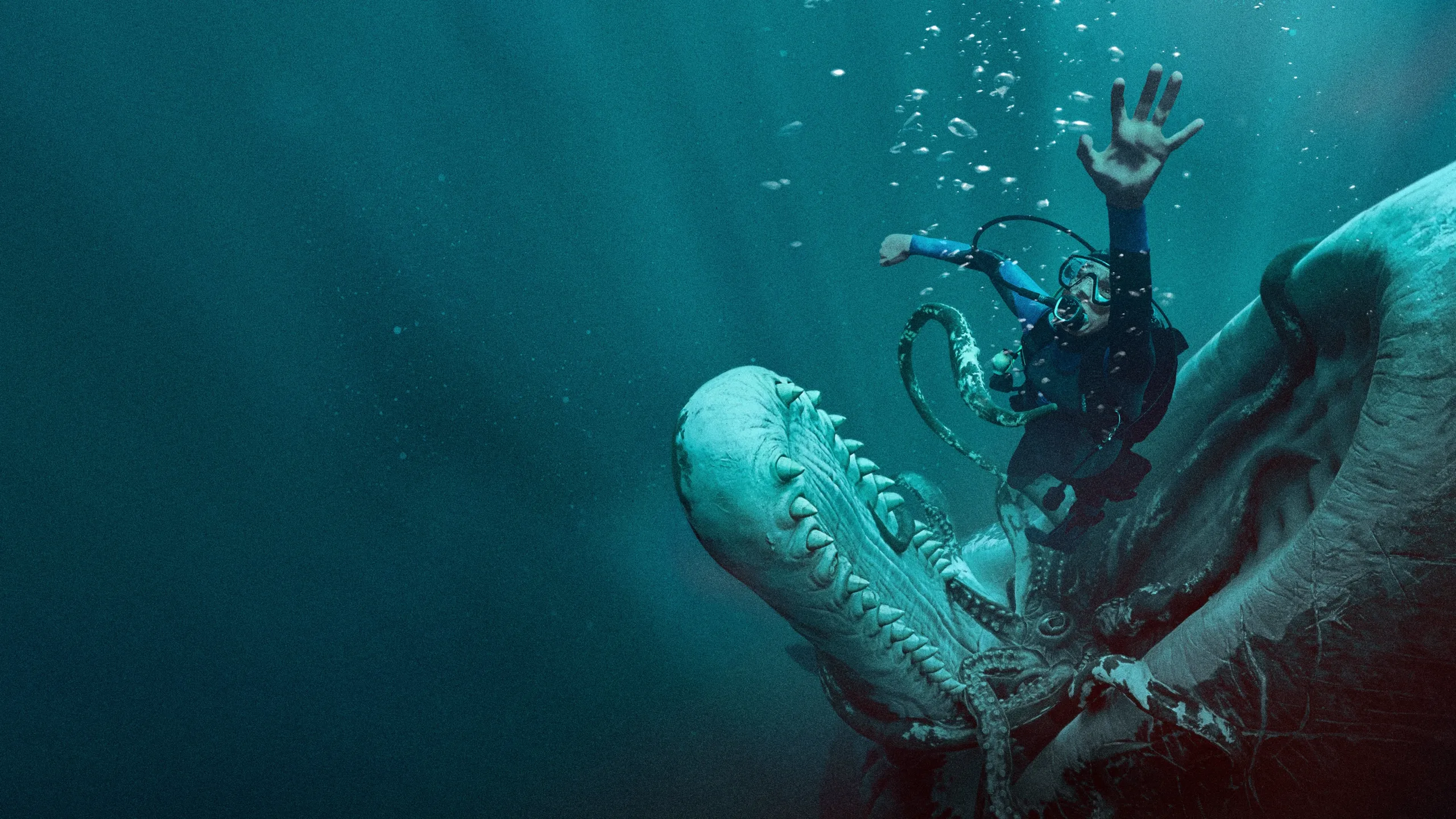
Following the death of his father, Jay (Austin Abrams, Weapons) goes searching for his fathers remains off the coast of Northern California. What seems like a normal dive, quickly turns into a nightmare as Jay is consumed by a sperm whale. Trapped inside the belly of the beast, Jay must fight to survive as his oxygen is quickly running out.
First and foremost, Whalefall is a thrilling and horrifying cinematic experience. Whatever phobia you may have, chances are you will experience some form of a panic attack while watching this film. The audience is thrown headfirst into the terrifying survival situation that Jay finds himself in, and from that point onward, there is little room to breathe. Both metaphorically and physically. You feel every ounce of sound reverberating through the whale’s stomach. Whether it is the haunting whale calls, the dramatic shifts in water pressure, or the thundering sounds of the whales heartbreak and stomach, the film’s sound design is so visceral that you can practically feel it vibrating through your bones.

The sound design is further elevated by the film’s incredibly claustrophobic cinematography and production design. Cinematographer Aaron Morton shoots this film almost entirely through extreme close-ups, allowing the audience to feel the panic setting in as Jay desperately tries to figure out how to escape the whale’s stomach. The production design further enhances this suffocating atmosphere, transforming the whale’s interior into an almost living set that is constantly shifting and threatening to change at any moment. One moment, Jay finds herself in a relatively open chamber where he can crawl around and catch his breath, and the next, the walls are closing in and threatening to squeeze the poor boy to death.
All of these survival elements are held together by a phenomenal performance by Austin Abrams. For the majority of the film, he is entirely alone on screen, making this essentially a one-man show. Yet Abrams commands the screen with a performance that is equal parts frantic, chaotic, vulnerable, and controlled. He manages to convey the sheer terror and desperation of being trapped inside a whale while keeping the audience invested in every second of his struggle to survive.
However, underneath the obvious survival thriller is a film about the fractured relationship between a father and son. Jay and his father, Mitt (Josh Brolin, Weapons), did not exactly have the best relationship, as Mitt struggled to communicate his feelings and emotions with his son, ultimately causing the pair to become estranged. Yet, while trapped in the belly of the whale, Jay begins recalling his father’s teachings, both the good and the bad, through a series of flashbacks. Thus, as Jay desperately navigates this terrifying survival situation, he is also forced to confront his complicated relationship with his deceased father. While this emotional subplot doesn’t always fit seamlessly into the film’s survival thriller framework, it does provide some much-needed emotional catharsis and gives Jay further motivation to fight for his survival.
Overall, Whalefall is a perfect example of the power of the cinematic experience. It is a thrilling, white-knuckle, and downright horrifying survival thriller that will make you think twice before ever stepping foot into the ocean again. Through its phenomenal sound design, claustrophobic cinematography, and a commanding performance from Austin Abrams, the film manages to make an already terrifying premise feel all the more visceral and suffocating. While its emotional subplot doesn’t always mesh perfectly with the survival thriller elements, it is a minor blemish on an otherwise gripping cinematic experience. Needless to say, I will be sticking to the swimming pool for the foreseeable future.
My Rating: B
Whalefall is now playing in theatres nationwide.



Leave a Reply